

For finance and lending
Automation for finance and lending
Applying should not mean rekeying the same details into three systems. We build the capture, the pipeline visibility and the audit trail that compliance keeps asking you for.
Where it goes wrong today
A broker receives a scenario by email, retypes it into a CRM, again into a lender portal, and a third time into a pricing sheet. Each rekey is a chance to introduce an error that will be found by a credit assessor a week later.
Then the customer rings to ask where it is, and nobody can answer without opening four systems.
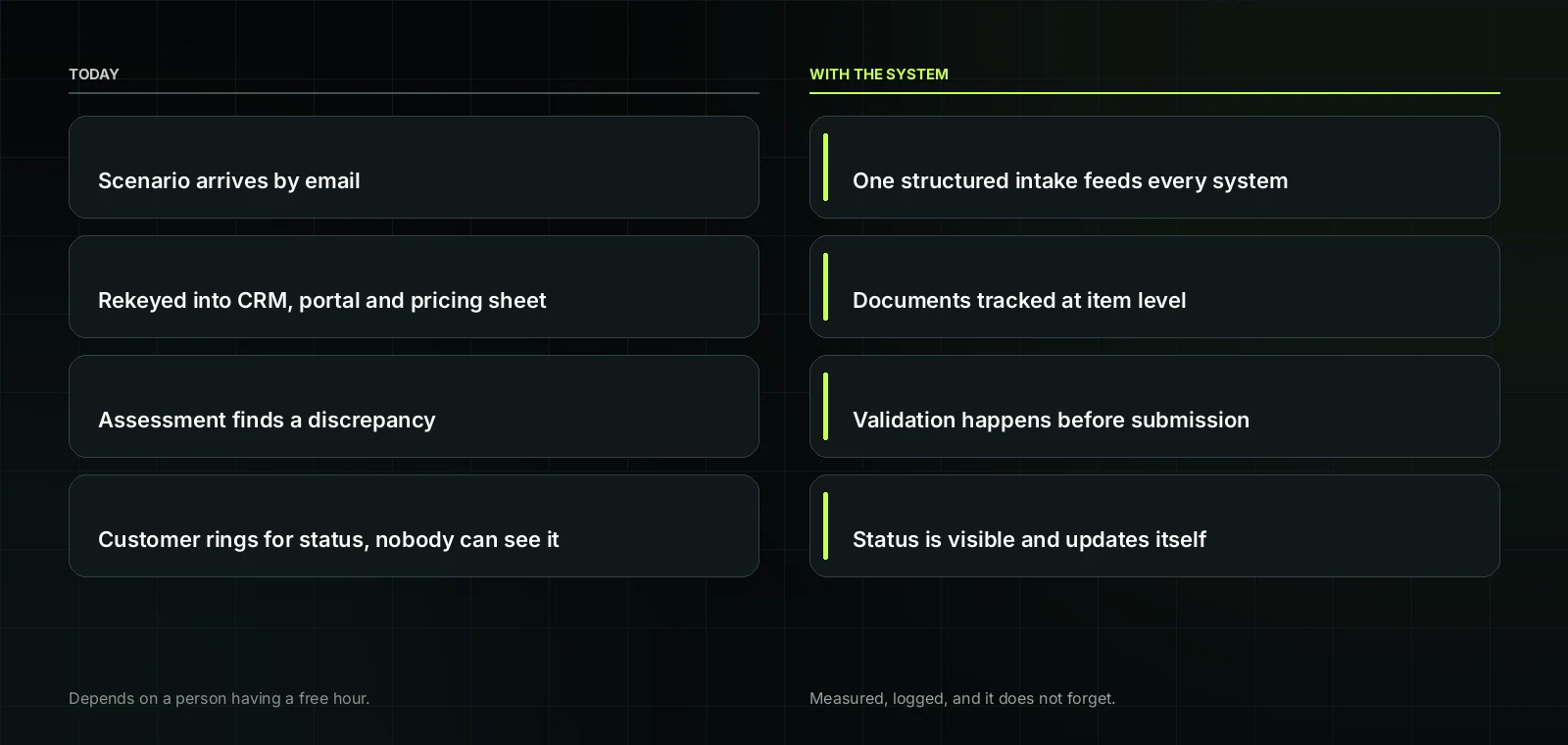
The same job, before and after.
The systems we build
Application capture
- One structured intake that feeds every downstream system
- Document collection with item level status
- Validation at capture, not at assessment
Pipeline visibility
- A live view any authorised person can read without asking
- Stage ownership and next actions explicit
- Customer facing status updates generated from real state
Compliance and audit trail
- Every action timestamped and attributable
- Consent and disclosure steps recorded with evidence
- Exceptions flagged before they become findings
Scenario and pricing tooling
- Scenarios priced consistently across channels
- Rate and product data from one place
- Outputs formatted for the lender, not just internally
How it fits together
It integrates with the CRM, the lender portals and the document store you already use. The first deployment is normally application capture, because the rekeying is both the biggest time cost and the biggest error source.
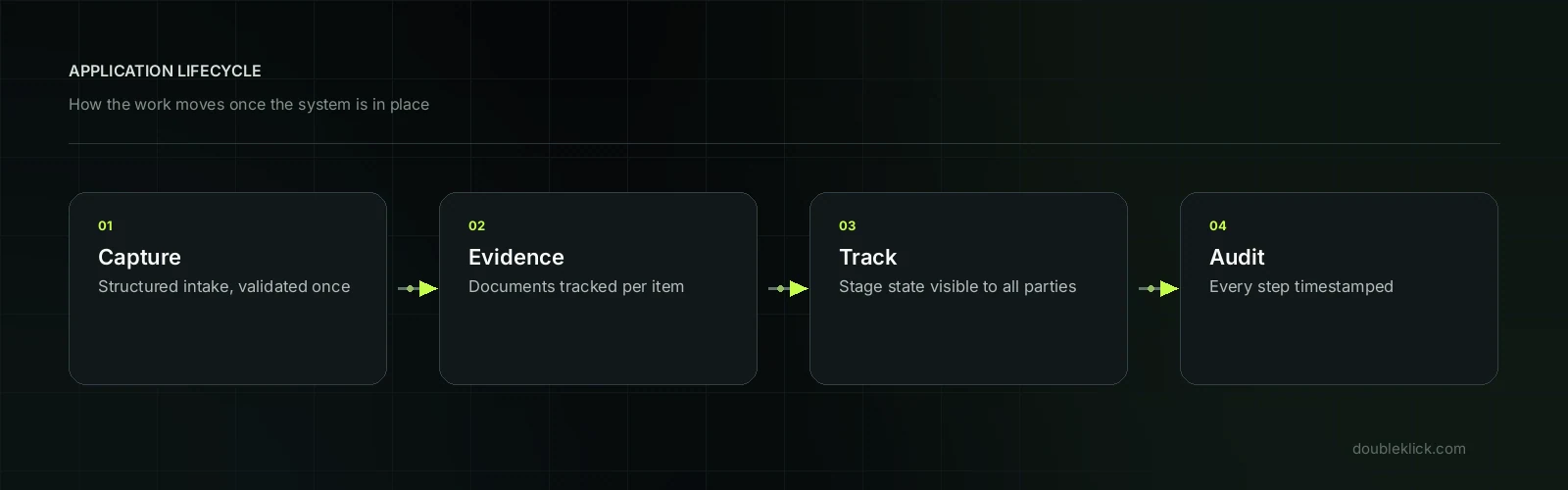
How an enquiry moves once the system is in place.
What actually changes
Rekeying stops. Errors get caught at capture instead of at assessment. Compliance answers become a report rather than a reconstruction, and customers get status without a phone call.
Questions we get asked
Can it submit to lender portals directly?
Where a portal exposes an API, yes. Where it does not, it prepares the submission and a person confirms it.
How do you handle consent?
Capture and record with a timestamp and an evidentiary trail, integrated with your existing consent method.
Does this replace the CRM?
No. It feeds it and reads from it.
Is client data stored with you?
No. It stays in your systems of record, and access is least privilege with logging.
Next Step
Twenty minutes finds the first two jobs worth automating.
We will tell you which ones to leave alone as well, and why.